Stories to Help Children Cope When a Pet Dies
For many children, a pet is their first experience of death, and their first lesson in grief. It's real, it's painful, and it deserves to be taken seriously. StoriesForMe creates personalized bedtime stories that honor the pet, validate the child's grief, and help them carry the love forward.
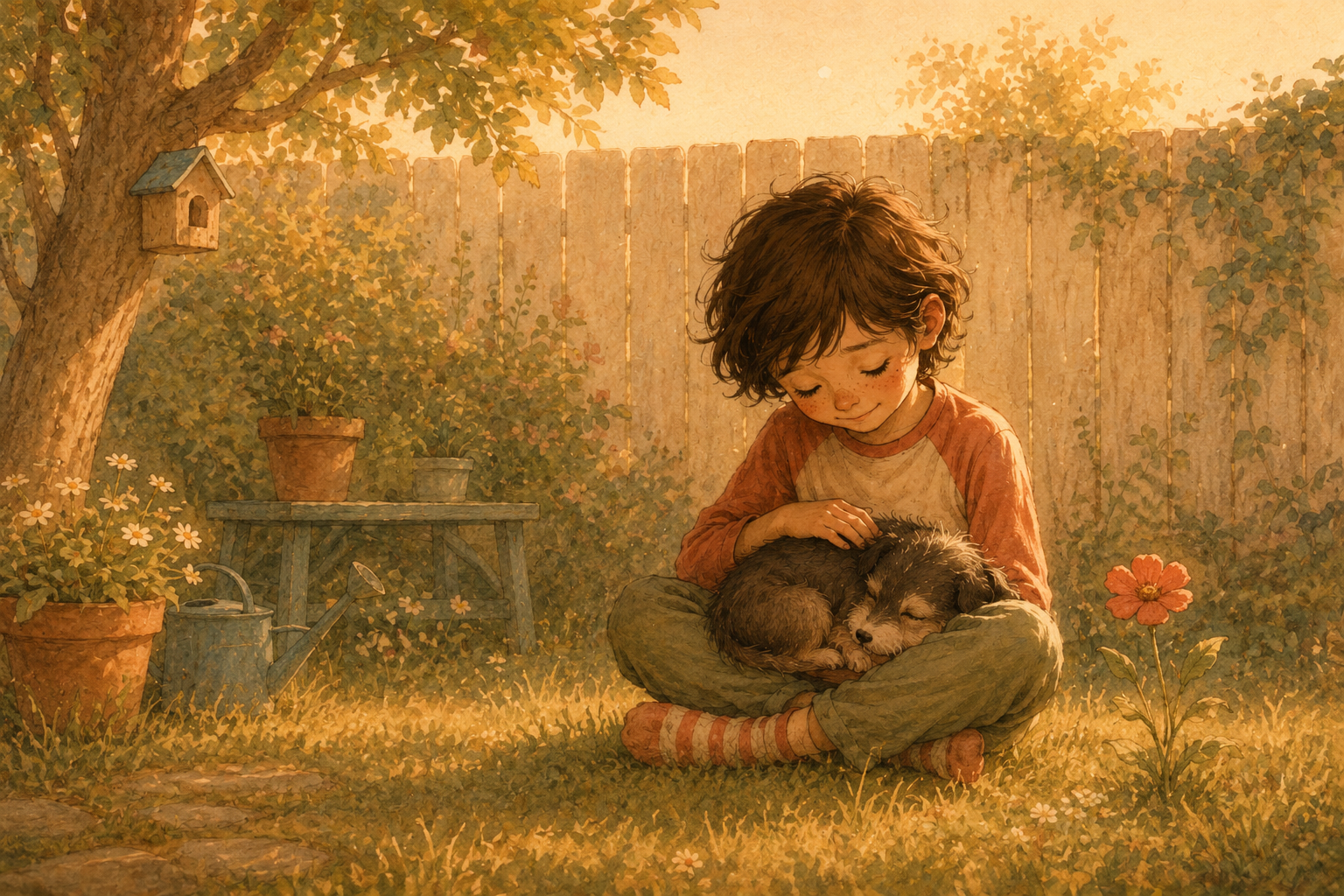
Their First Goodbye
Children who lose a pet often encounter adult responses that minimize their grief: 'it's just a dog,' 'we'll get another one.' But the loss is real, the love was real, and the grief deserves space. For many kids, this is also the first time they've encountered the permanence of death, which raises questions that have no easy answers.
- Child asks if the pet is in pain, where they went, or if they'll come back
- Becomes tearful at random moments, especially at night
- Looks for the pet in their usual spots and is newly upset each time
A Story That Honors the Love
StoriesForMe pet loss stories don't rush grief or offer false comfort. They hold the love the child had for their pet, celebrate who that animal was, and gently explore what it means to carry someone with you after they're gone.
- 1
Tell us about the pet
Their name, what kind of animal they were, what made them special, and how your child is handling the loss. The story will be built around this specific relationship.
- 2
A story that celebrates who the pet was
Your child's named hero grieves a pet whose personality is woven into the story, and learns that love doesn't end, it changes shape.
- 3
Let it open the door to questions
After the story, children often ask the questions they couldn't find words for before. Be ready. These are the conversations that help grief move.
What's inside the story
- Your child's name and their pet's name and personality
- Grief portrayed honestly without minimizing it
- Age-appropriate exploration of loss and memory
- A resolution about love and carrying someone forward
What Parents Notice
Pet loss stories give children a ritual container for grief, something they can return to as the loss sinks in over time.
- Children begin to talk about the pet with love rather than just pain
- Grief has a place to land in the story, rather than surfacing as behavior
- Kids develop early language for loss that will serve them their whole lives
How to use this story with your child
A few prompts, a script, and a small follow-up. For after the story, when the conversation begins.
Discussion prompts
- What was your pet's most you-and-them moment? The thing nobody else got with them?
- What do you imagine your pet would be doing right now if they could?
- What's the hardest part of the day without them?
- If your pet could leave you one message, what do you think it would be?
What you can say
It's not 'just' a pet. They were part of our family, and the love was real, so the missing them is real too. You can take all the time you need.
Goodbye letter or drawing
Help your child write or draw a goodbye to their pet. Keep it short. A favorite memory, a thank-you, the thing they wish they'd said one more time. Some families read it out loud at the burial spot or the pet's favorite napping place. Others tuck it inside a memory box. Saying goodbye on purpose, in their own words, is part of how grief gets to move.
When the story is best introduced
In the first day or two after the loss, your presence matters more than any book. Hold them. Let them cry. Let them ask the same question over and over and answer it the same way each time. Bring the story in once the first wave has settled, usually a few days later, when they're ready to sit with the feeling instead of being knocked over by it.
When a story isn't enough
Stories are a support, not a substitute for professional care. If you notice any of the following, please reach out to your child's pediatrician, school counselor, or a licensed mental health professional.
- Grief that is still as raw weeks later as on day one, with no softening at all
- New, persistent fear that other family members or pets will also die
- Sleep disruption, nightmares, or refusing to be alone, lasting longer than a few weeks
- Withdrawal from friends or activities they previously loved
- Talk of wanting to die so they can be with the pet
If your child says they want to die, disappear, or go away, or shows it through repeated self-injury, withdrawal, or play and drawings about death, please reach out the same day. Your pediatrician is a good first call for younger children. In the US, you can also call or text 988 (Suicide & Crisis Lifeline) or 1-800-448-3000 (Boys Town, child-trained counselors). If your child is in immediate physical danger, call 911 or go to your nearest emergency room.
Stories are a support, not a substitute. If you're worried about your child's wellbeing, your pediatrician is a good first call. In the US, you can also reach 988 (Suicide & Crisis Lifeline) any time.
Help them carry the love forward.
A story built around their pet, their grief, and their love. Ready tonight.
Download FreeFree to try. No credit card required.