Stories to Help Kids Make Friends
Some kids make friends effortlessly. Others struggle with every step: starting a conversation, joining a group, knowing what to say. StoriesForMe creates personalized bedtime stories where your child practices the social moments they find hardest, through a hero who looks and sounds just like them.
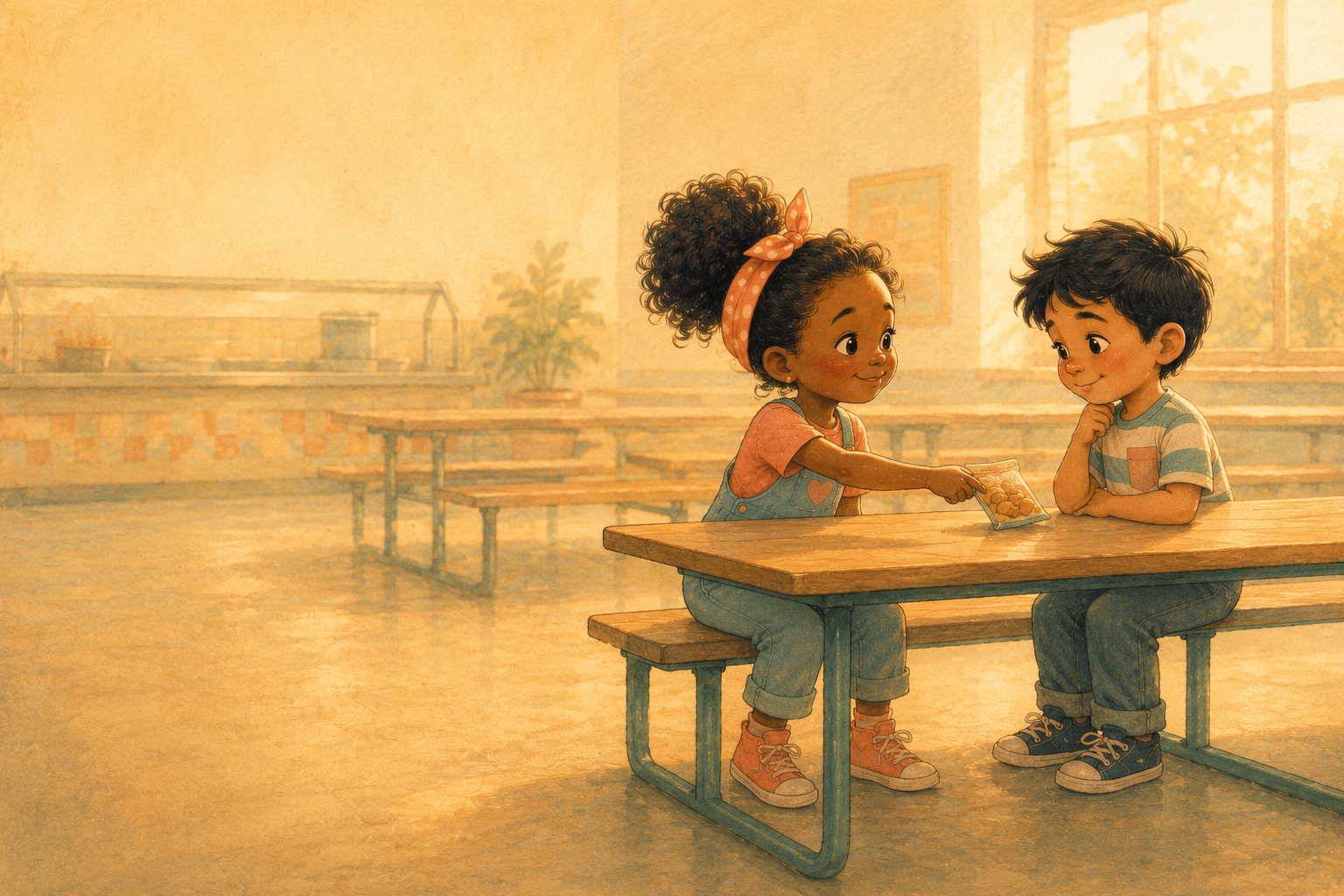
When Making Friends Feels Impossible
Friendship skills don't come naturally to every child, and that's okay. But watching your kid eat alone, hang back at birthday parties, or come home and say 'nobody played with me today' is genuinely heartbreaking. Kids who struggle socially often know exactly what they want to say but freeze when the moment comes.
- Child reports being alone at lunch or recess consistently
- Avoids social situations or cries before school events
- Doesn't know how to start a conversation or join a group activity
A Story That Rehearses the Hard Moments
StoriesForMe friendship stories give kids a chance to rehearse social scenarios in the safety of narrative. Their hero faces the same awkward moments and works through them. That mental rehearsal builds real-world confidence.
- 1
Tell us what your child struggles with most
Starting conversations? Joining a group? Being rejected? Knowing what to say? The more specific you are, the more useful the story will be.
- 2
A story built around their specific social challenge
Your child's named hero navigates a realistic friendship scenario, not a fairy-tale social world, but one that actually resembles what they face.
- 3
Talk about it after. That's when the magic happens
After reading, ask: what would you have done? What did the hero do that surprised you? These conversations are where the skills actually transfer.
What's inside the story
- Named after your child
- Realistic social scenarios, not idealized ones
- Age-appropriate friendship language and strategies
- A hero who succeeds without being perfect
What Parents Notice
Friendship stories work best as an ongoing tool, not a one-time fix. Over time, children begin internalizing the social scripts they've rehearsed in narrative.
- Children start using phrases from their story in real social situations
- Anxiety around social events decreases as they feel more prepared
- Kids become more willing to take the social risk of trying, even when it's hard
How to use this story with your child
A few prompts, a script, and a small follow-up. For after the story, when the conversation begins.
Discussion prompts
- What did the hero do that surprised you? Could you do something like that?
- What's the hardest part of meeting someone new?
- What's one thing you'd want a new friend to know about you?
- Have you ever had a friendship start in a way you didn't expect? How did it begin?
What you can say
Friendships take practice, and the practice itself is brave. You don't have to be liked by everyone. You only need a few people who really see you.
Try-something-small list
Together, brainstorm a few small social moves your child could try this week. Ask one person what they did over the weekend. Sit next to someone new at lunch. Try a compliment that's actually about the person — not 'nice shirt' but something like 'I saw you knew the answer in math today.' These attempts feel tiny, and they are; that's the point. Most kids who say they 'can't make friends' are short on practice, not personality.
Stories are a support, not a substitute. If you're worried about your child's wellbeing, your pediatrician is a good first call. In the US, you can also reach 988 (Suicide & Crisis Lifeline) any time.
Give them the story that helps them try.
Personalized for your child's specific social challenge. Ready tonight.
Download FreeFree to try. No credit card required.