Bedtime Stories for Kids Who Are Moving
Moving to a new home is exciting for parents and terrifying for kids. Their room, their neighborhood, their whole sense of 'home' is being left behind. StoriesForMe creates personalized bedtime stories that help children grieve what they're leaving, get curious about what's ahead, and carry their sense of self through the transition.
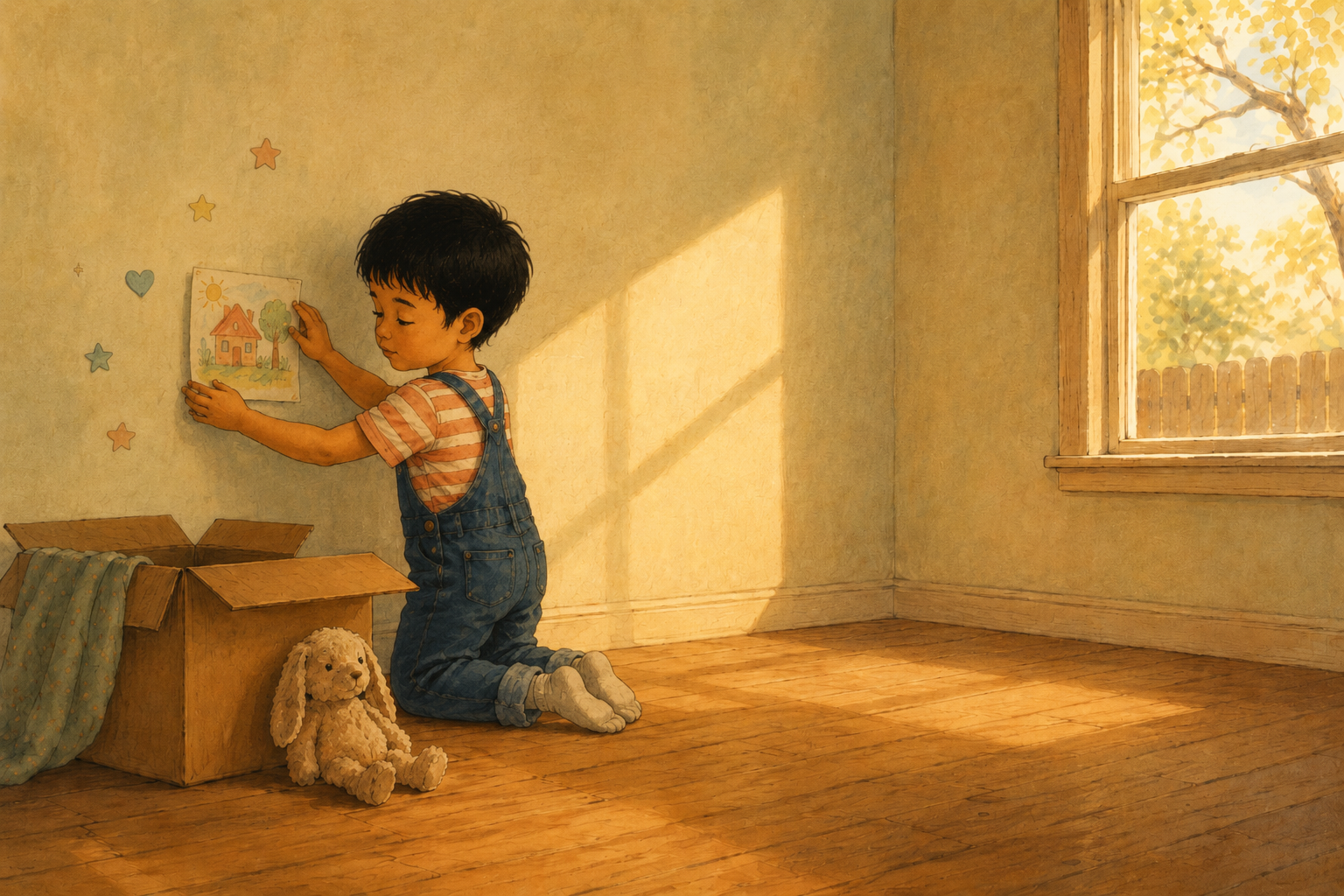
Home Is More Than an Address to a Child
Kids have deep emotional attachments to physical spaces: their room, their backyard, the tree they climbed, the neighbor's dog. Moving doesn't feel like an upgrade; it feels like loss. And unlike adults, they didn't choose it and can't fully understand why it's happening.
- Child cries about leaving friends, their room, or a specific place
- Refuses to pack their things or help in any way
- Acts out or withdraws as the move gets closer
A Story That Honors the Leaving and Celebrates the Arriving
StoriesForMe moving stories hold both things at once: it's okay to be sad about what you're leaving, and there's something worth being curious about ahead. The child's hero says goodbye well, and starts to imagine what hello might look like.
- 1
Tell us what your child is most worried about leaving
Their best friend? Their bedroom? A pet they're leaving behind? A school they loved? Knowing what matters most to them shapes the heart of the story.
- 2
A story about leaving, arriving, and carrying yourself with you
Your child's hero takes the move on, saying goodbye, meeting the new place, and discovering that the most important parts of home travel with them.
- 3
Start before the move, continue after
Begin reading a week before moving and continue in the new place. The story becomes a constant in an environment of change.
What's inside the story
- Your child's name and what they're leaving behind
- A narrative that validates grief and builds excitement
- Themes of continuity: who you are doesn't change when your address does
- A resolution that opens curiosity about the new place
What Parents Notice
Moving families report that the story becomes an anchor during the chaos, something the child controls and returns to in the middle of upheaval.
- Children become more willing to engage with the idea of the new home
- Grief over leaving is named and validated, reducing acting out
- Kids begin to generate their own curiosity about what's next
How to use this story with your child
A few prompts, a script, and a small follow-up. For after the story, when the conversation begins.
Discussion prompts
- What's the thing about our old home you're going to miss the most?
- What's one thing you could be curious about at the new place?
- What about you doesn't change when our address does?
- If you got to design your room in the new house, what would it look like?
What you can say
It is okay to be sad about leaving. The sadness means our home meant something. We're going to carry the important parts with us, including each other.
Goodbye walk
Before you move, take a slow walk with your child around the old home, inside and out. Let them say goodbye out loud or in their head to specific places: the room, the tree, the corner of the kitchen where the pancakes happen, the spot on the carpet that's always warm in the morning. Naming the goodbye on purpose is part of how grief moves through a kid instead of staying stuck inside them.
Stories are a support, not a substitute. If you're worried about your child's wellbeing, your pediatrician is a good first call. In the US, you can also reach 988 (Suicide & Crisis Lifeline) any time.
Their next chapter starts before the boxes are unpacked.
A personalized story about leaving, arriving, and being brave through both.
Download FreeFree to try. No credit card required.